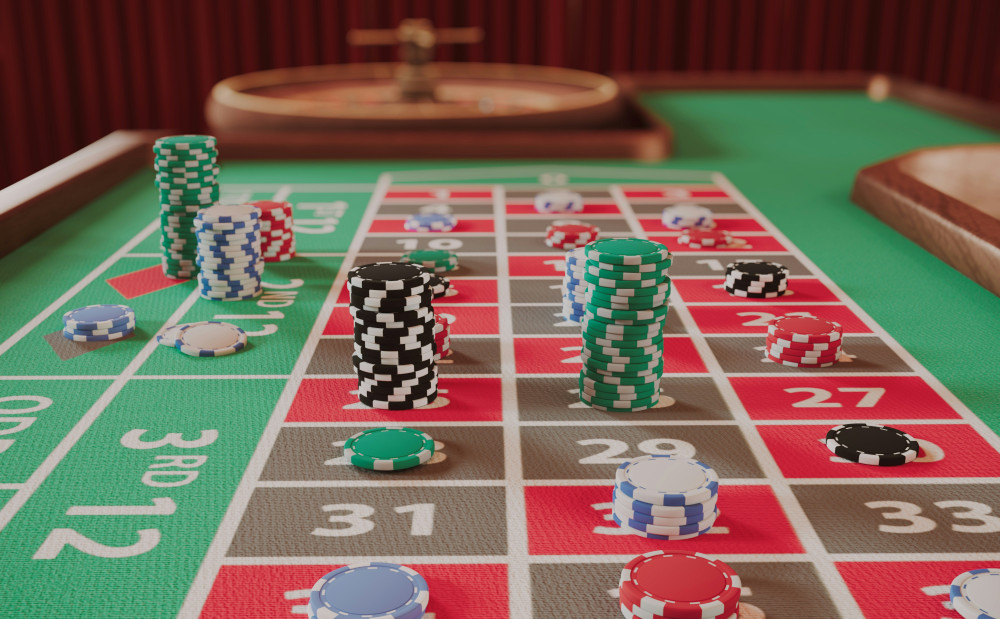
How the Roulette Wheel Works – and Why the Game Is Considered Fair


How the Roulette Wheel Works – and Why the Game Is Considered Fair
Roulette is one of the most recognizable casino games in the world – a game that blends chance, excitement, and elegant simplicity. But how exactly does the roulette wheel work, and why is it considered fair when the outcome seems to depend entirely on luck? Here’s a closer look at the mechanics, the mathematics, and the principles that ensure fairness in this timeless game.
A Wheel, a Ball, and Endless Possibilities
The word roulette comes from French and means “little wheel.” The wheel is the heart of the game, divided into numbered pockets that alternate between red and black, with one or two green pockets for the zeros. The European version has 37 pockets (numbers 1–36 plus a single zero), while the American version has 38 (including both a zero and a double zero).
When the game begins, the dealer – known as the croupier – spins the wheel in one direction and rolls a small ball in the opposite direction. As the ball slows down, it bounces over small metal separators before settling into one of the numbered pockets. The number where the ball lands determines the winning outcome.
Læs også:




The Mathematical Balance
Roulette is built on a carefully balanced structure of probabilities. In European roulette, each number has a 1 in 37 chance of being selected. This means that, in theory, every spin is completely random – no number is more likely than another.
The casino’s advantage, known as the house edge, comes from the zero pocket. When the ball lands on zero, all even-money bets (like red/black or odd/even) lose. This gives the house a small but consistent edge of 2.7% in European roulette. In American roulette, the extra double zero increases the house edge to 5.26%. This margin allows casinos to offer the game without manipulating the results.
Why the Game Is Considered Fair
Roulette is regarded as fair because its outcome is based on physical randomness and mechanical precision. Modern roulette wheels are engineered with extreme accuracy to ensure that weight and balance are evenly distributed, preventing any bias toward specific numbers. Licensed casinos regularly test their wheels to confirm that they are not tilted or tampered with.
In India, where online gaming is growing rapidly, fairness is also ensured through technology. Online roulette uses Random Number Generators (RNGs) to simulate the spin of the wheel and the movement of the ball. These RNGs are tested by independent laboratories to verify that every result is random and cannot be predicted or influenced by players or operators.
European vs. American Roulette
While the two versions look similar, the difference between one and two zero pockets significantly affects the odds. In European roulette, the chance of hitting a specific number is 1 in 37, while in American roulette it’s 1 in 38. This makes the European version more favorable for players.
Some casinos also offer French roulette, which is similar to the European version but includes special rules such as La Partage and En Prison. These rules allow players to recover part of their bet if the ball lands on zero, further improving the player’s chances and reinforcing the game’s reputation for fairness.
Myths and Misconceptions
Roulette has inspired countless myths. Some players believe that certain numbers are “due” to appear or that patterns can be detected in previous spins. In reality, each spin is independent of the last. The ball has no memory, and the probability remains the same every time.
Others rely on betting systems like the Martingale or Fibonacci strategies, hoping to overcome losses through structured betting. While these systems can create short-term excitement, they do not change the underlying mathematics of the game. Roulette remains a game of chance – and that unpredictability is part of its enduring appeal.
A Game That Has Stood the Test of Time
Roulette has been played since the 18th century and has changed very little since then. Its lasting popularity comes from its perfect mix of simplicity, transparency, and suspense. Every spin is visible to all players, and the result is determined in plain sight – there are no hidden mechanisms or secret rules.
For Indian players exploring both land-based and online casinos, roulette represents a classic example of how a game can be both thrilling and fair. Whether played in a glamorous casino in Goa or on a licensed online platform, the same principles of randomness and balance apply. That’s why roulette continues to be celebrated worldwide as one of the fairest and most captivating games of chance.
Læs også: